



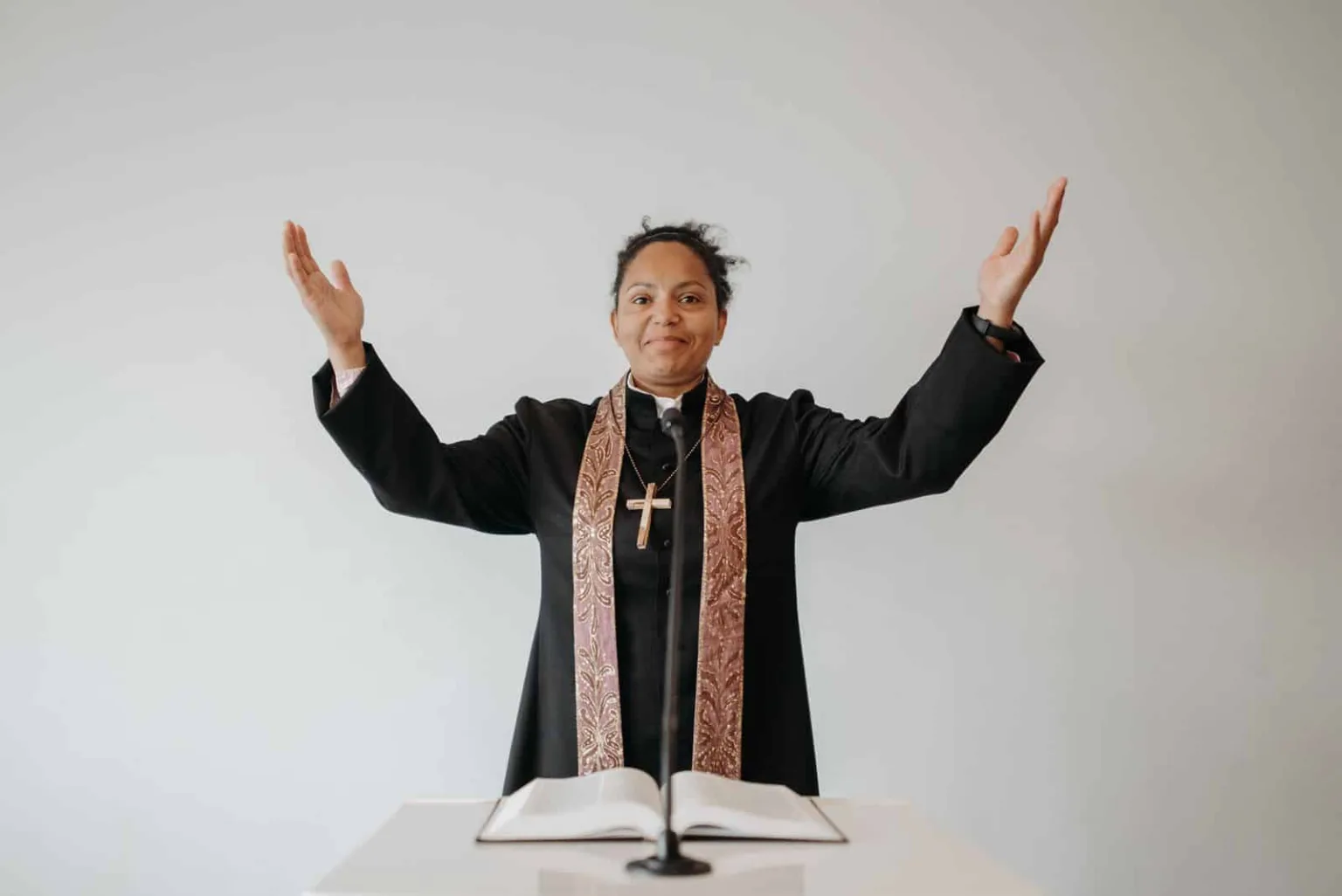
Someone asked you to preach once or twice. People come to you when something is wrong, and your pastor keeps handing you responsibilities nobody formally gave you. If you are wondering how to become a pastor without a degree, you are in good company, and the answer is more hopeful than you might expect.
In short: Yes, in many churches you can become a pastor without a degree. No law requires one; each church or denomination sets its own standards, and some do require seminary. The usual path is to test your calling, serve under a mentor, complete foundational training, and be recognized or ordained by the church or network you serve.
In this article
Do you need a degree to be a pastor?
Not always. In the United States no government license or degree is required to be a pastor; churches and denominations set their own standards. Some traditions require a Master of Divinity for ordination, while many independent and non-denominational churches look first at calling, character and proven ministry.
Even one denomination can offer more than one route. The Christian Reformed Church in North America, for example, has two pastoral ordinations: Minister of the Word, which requires a Master of Divinity from an accredited seminary, and Commissioned Pastor, for which a standardized academic degree is not required and the learning plan varies from one regional classis to another. So ask the church or network you want to serve exactly what it expects.
Scripture points in the same direction. When Paul lists the qualifications of an overseer in 1 Timothy 3:1–7 and Titus 1:5–9, he describes character, a well-ordered home, a good reputation and the ability to teach. He never mentions a diploma. Training matters a great deal, but the Bible treats it as preparation for a calling, not as the calling itself.
| Path | Typical time | What it gives you | Does it ordain you? |
|---|---|---|---|
| Seminary degree (MDiv) | Usually three years of full-time study | Deep theology, biblical languages, the credential some denominations require | No; a church or denomination ordains after it |
| Denominational training or licensing track | Months to years, depending on the body | Your church’s doctrine, process and accountability | It leads toward ordination in that body |
| Apprenticeship with a pastor | Ongoing | Real ministry experience and a mentor who knows you | No, but your mentor can recommend you |
| Online certificate course | About 40 hours at Presence College, often four to eight weeks | Biblical foundations you can study around work and family | No; it can support an application |
What does a pastor actually do all week?
Far more than preach. A pastor studies and teaches, visits the sick and the grieving, counsels couples and families, leads volunteers, makes decisions about money and buildings, and carries the private weight of knowing what many people are going through.
Pastoral ministry is a set of skills, not only a title. Preaching is one. Caring for people is another; to understand that side of the role, start with what pastoral care is and why the whole church shares it. Leading a team, understanding how a church is governed and protecting your own spiritual life are the rest. Skills can be learned one at a time, and you do not need a degree to begin.
How do you know if you are called to be a pastor?
A calling usually shows up as a lasting desire to shepherd people, confirmed by others. Scripture calls that desire good (1 Timothy 3:1), but it pairs it with character and asks the church to test it, so your pastor and the people you serve should see it too.
Three questions help. Do people already come to you for prayer, advice or comfort? Do you love the church even when it disappoints you? And do mature leaders who know you well see this gift in you? A call that only you can see is worth praying about; a call that others confirm is worth acting on.
Be diligent to present yourself approved to God, a worker who does not need to be ashamed, rightly dividing the word of truth.
2 Timothy 2:15 (NKJV)
Calling and training are not rivals. A calling without preparation leads to burned-out leaders and hurt congregations. But the order many people assume, degree first and ministry later, is not the only faithful one: across church history, pastors have also been formed through apprenticeship, reading and mentoring. A Christian spiritual coach can also help you test the call and plan your next steps.
How to become a pastor without a degree, step by step
Most people who become pastors without a degree follow the same basic order: test the call, serve, find a mentor, train, learn your church’s process and seek recognition. The steps overlap and can take months or years, but you can start the first one this month.
- Talk to your pastor. Share what you sense, ask for honest feedback and ask where you could serve more.
- Serve where you are. Lead a small group, visit people in the hospital, help with youth, preach when you are asked. Faithfulness in small things comes first (Luke 16:10).
- Find a mentor. Ask an experienced pastor to let you watch how they handle funerals, conflict, budgets and hard conversations.
- Get foundational training you can finish. Look for theology, preaching, pastoral care, leadership and ethics. The Intro to Pastoral Ministry course is built as that first step.
- Learn your church’s path. Ask exactly what your church, denomination or network requires for licensing or ordination.
- Seek recognition. Pursue licensing, commissioning or ordination through the body you serve, so that your ministry has accountability.
- Keep learning. Read, attend conferences and consider seminary later if your role or tradition calls for it.
Can you become a pastor online?
You can train online, but you cannot become a pastor online alone. Online courses can give you solid foundations around work and family; the calling, the testing and the recognition still happen in a real church, among people who know you.
So if you are researching how to become a pastor online, treat the internet as the classroom, not as the church that sends you. Good online training is structured, rooted in Scripture, assessed and honest about its limits. Be careful with websites that ordain you in minutes. Those ordinations are mostly used to officiate a wedding, acceptance varies by state and county (check with the local marriage license office), and they are not the same as being called, trained and confirmed by a church.
From the course: Intro to Pastoral Ministry covers ten modules, from the nature and calling of pastoral ministry and pastoral identity and character to biblical and theological foundations, preaching, teaching and discipleship, leadership and church administration, and ethics, boundaries and accountability. It is about 40 hours of PDF and audio lessons, with optional quizzes, a final exam (80% to pass, retakes allowed) and a printable certificate endorsed by Shakeid Ministries Global that earns 4 Ministry Credit Hours.
How do you get ordained?
Ordination is granted by a church, denomination or ministry network, not by a school. It is the public recognition that God has called you and that the church confirms it. Many bodies ask for a period of supervised service, an examination of beliefs and character, and references.
So learning how to get ordained starts with one question: who will recognize your ministry? In the New Testament, it was the church. In Antioch, the believers fasted, prayed and laid hands on Barnabas and Saul before sending them out (Acts 13:2–3). That is why a course cannot ordain you, and no honest school will claim otherwise; good training prepares you for what ordination carries.
If you already belong to a denomination or network, start there, because its ordination is the one your church will recognize. Presence College also offers an ordination application with Shakeid Ministries Global, the ministry that endorses our certificates. It is a separate step from any course. The application asks about your calling and spiritual background, your education and ministry training, your church affiliation and accountability, your doctrinal beliefs and character, and it asks for three references. Shakeid Ministries Global reviews each application and makes the decision, sometimes after an interview.
How do you start in ministry before you have a title?
Start with the people already in front of you. Small groups, hospital visits, the worship team, mentoring a teenager or praying with a neighbor are real ministry, and they are where a calling gets tested.
- Serve on Sundays. Hospitality, children’s ministry, prayer teams or music. If music is your place, learn what a worship leader does beyond leading songs.
- Care for people midweek. Visits, calls and meals teach you more about shepherding than any classroom.
- Learn when to refer. You will meet anxiety, depression and crisis early. Our guide to church and mental health explains how to support people and when to bring in a professional.
- Honor the leaders above you. Serving your pastor well is part of your own training. Our pastor appreciation month ideas are a simple place to start.
When does a seminary degree make sense?
Seminary makes sense when your denomination requires it, when you want to teach theology at a higher level or serve as a hospital or military chaplain, or when you have the time and means to study in depth. Starting with a shorter course does not close that door.
Learning how to become a pastor without a degree is less about finding a shortcut and more about taking the next faithful step in front of you. If people already come to you and the question of calling keeps coming back, start with one course you can actually finish: explore Intro to Pastoral Ministry.
Presence College certificates record completion of a course and its final assessment. They do not ordain anyone or grant a government license. Ordination is granted by churches, denominations and ministry networks; the ordination application with Shakeid Ministries Global is a separate process with its own review.
Frequently asked questions
How long does it take to become a pastor?
It depends on your church. Some denominations expect a seminary degree plus a candidacy process, while others recognize leaders after a season of proven service and training. The Presence College Intro to Pastoral Ministry course is about 40 hours, and most students finish in four to eight weeks.
Can you become a pastor for free?
Mentoring and church-based training often cost little or nothing, and they are excellent preparation. Free online ordinations exist, but they are mostly used for officiating weddings, not for recognition as a pastor by a church.
Can I be a non-denominational pastor without a degree?
Often, yes. Independent and non-denominational churches set their own standards, so calling, character and training usually matter more than a diploma. Look for real accountability, such as elders or a ministry network.
Does a pastoral ministry certificate make me ordained?
No. A certificate shows that you completed foundational training. Ordination is granted by a church or ministry body, and many of them welcome evidence of training as part of the process.
Is Presence College legit?
Presence College is a faith-based online college with private institutional accreditation from KISA, which is not government or regional accreditation. We explain exactly what that means in is Presence College legit.
Presence College holds private institutional accreditation from the Kingdom International Standards Authority (KISA) and its courses are ministry-endorsed by Shakeid Ministries Global. Read what KISA accreditation means for you as a student.
Recommended course
Called to pastoral ministry?
Build the foundations to serve your church well, 100% online and at your own pace.
- 40 hours, self-paced
- PDF and audio lessons
- Printable certificate
Regular price:
$395
Current price:
$77
15-day money-back guarantee