




Someone sends you a message late at night because you are the person they trust. A coworker mentions a diagnosis over lunch, or a couple from your small group asks if they can talk after church. Moments like these lead many believers to a simple question: what is a Christian counselor, and could God be preparing me to become one?
In short: A Christian counselor is a trained helper who supports people through emotional, relational and spiritual struggles by combining biblical truth, prayer and practical counseling skills. Some serve in churches and ministries without a state license; others are licensed therapists who integrate their faith. Both listen well, respect their limits and refer people to medical or clinical care when needed.
In this article
- What is a Christian counselor?
- What does a Christian counselor do?
- How Christian counseling differs from secular counseling
- Christian vs biblical vs pastoral counseling
- Christian counselor vs therapist
- Do Christian counselors need a license?
- Where Christian counselors work
- When to refer someone
- How to become a Christian counselor
What is a Christian counselor?
A Christian counselor is someone who helps people work through grief, conflict, anxiety, crisis and questions of faith, with Scripture and the work of the Holy Spirit at the center of that care. The title covers a wide range of people, from trained church volunteers to licensed clinicians.
What unites them is a way of seeing people. Every person is made in the image of God, so care attends to the whole person: thoughts, emotions, body, relationships and faith. The aim is not only relief in a hard week but lasting change, restored relationships and a closer walk with God.
That care can happen almost anywhere: a pastor’s study, a church care room, a hospital waiting area, an online call or a counseling office. The setting changes, but the posture stays the same. It is love that listens, truth spoken with care and grace that makes honesty safe.
Counsel in the heart of man is like deep water, but a man of understanding will draw it out.
Proverbs 20:5 (NKJV)
Proverbs 20:5 pictures counsel as water deep in a well. A good counselor does not pour answers in from the outside. Through patient questions and attentive listening, they help a person draw out what is already there, and then bring God’s Word to bear on it.
What does a Christian counselor do?
A Christian counselor listens carefully, helps people name what they are facing, brings in Scripture and prayer when the person welcomes it, and guides them toward wise next steps. Just as important, they keep confidences, hold healthy boundaries and recognize when someone needs medical or clinical help.
A typical week of ministry counseling might include:
- meeting with a widow a few months after her husband’s funeral;
- helping an engaged couple talk honestly about money, family and expectations;
- sitting with a parent whose teenager has stopped coming to church;
- praying with someone who feels far from God after losing a job;
- following up after a referral to a doctor or licensed therapist, and staying in touch.
Most of this work is quiet and ordinary. It rests on a few core skills: active listening, open questions, reflecting back what you hear, and knowing when to speak and when to stay silent. We cover these in more depth in our guide to Christian counseling techniques.
Picture a man in his sixties who stops you after a men’s breakfast. His wife has early dementia, and he admits he is exhausted and angry, then ashamed of being angry. A Christian counselor does not rush to correct him or hand him a verse and move on.
Instead, you listen, reflect back what you hear and ask what has been hardest. Later, if he welcomes it, you pray together, read a psalm of lament and help him find a caregiver support group. Then you keep checking in, because good care rarely ends after one conversation.
How is Christian counseling different from secular counseling?
Christian counseling uses many of the same practical skills as secular counseling, but it starts from a different view of people, suffering and change. It sees each person as created by God, treats Scripture as a trustworthy guide and depends on the Holy Spirit for lasting change.
So what is Christian counseling at its core? It is care that brings the whole of a person’s life under the light of the gospel. Psychology can describe patterns of thought and behavior well, and many Christian counselors draw on that research.
A Christian counselor also asks spiritual questions: Where is God in this? What does His Word say about this fear, this loss or this conflict?
It is just as important to say what Christian counseling is not. It is not a lecture or a quick verse for every problem. It does not replace medical treatment, and it does not promise healing on a schedule. At its best, it looks like the way Jesus met people: He listened, asked questions, told the truth with compassion and treated each person with dignity.
As a non-denominational college shaped by the Pentecostal tradition, we would add one more distinctive. A Christian counselor can expect the Holy Spirit to guide a conversation, bring comfort and give wisdom beyond their own. That dependence keeps the counselor humble and keeps the focus on God rather than on technique.
Christian counseling vs biblical counseling vs pastoral counseling
These three terms overlap, but they are not identical. Christian counseling usually combines Scripture with practical counseling skills and insights from psychology. Biblical counseling treats Scripture as the sufficient framework for care. Pastoral counseling describes the care pastors and church leaders give as part of shepherding a congregation.
The modern biblical counseling movement grew out of Jay Adams’s 1970 book Competent to Counsel, which pushed back against reliance on secular psychology. Today, organizations such as the Association of Certified Biblical Counselors train and certify biblical counselors, mostly for church settings. Christian counseling is the broader label, and it includes both lay helpers and licensed clinicians.
| Role | Main framework | Typical training | Typical setting | Diagnoses or treats mental illness? |
|---|---|---|---|---|
| Christian counselor (ministry) | Scripture, prayer and practical counseling skills | Faith-based certificate or church training | Churches, ministries, community groups | No; refers when clinical care is needed |
| Biblical counselor | Scripture as the sufficient guide | Church or seminary training, sometimes certification | Local churches and church counseling centers | No, unless separately licensed |
| Pastoral counselor | Shepherding care within a congregation | Seminary or ministry training | The pastor’s own church | No, unless separately licensed |
| Licensed Christian therapist | Clinical methods integrated with Christian faith | Master’s degree, supervised hours, exam and state license | Clinics, agencies, private practice | Yes, within the scope of the license |
Labels matter less than substance. Whatever someone calls their work, look for care that is faithful to Scripture, skilled in listening, honest about its limits and wise about referral.
Christian counselor vs therapist: what is the difference?
The main difference is the license, not the faith. A licensed therapist can assess, diagnose and treat mental-health conditions under state law. A ministry-based Christian counselor offers spiritual care and practical support, and refers people to licensed professionals when clinical treatment is needed.
The two roles often overlap. Many licensed therapists are committed Christians who integrate prayer and Scripture when a client asks for it. In the US, their credentials appear as letters after their name, such as LPC (licensed professional counselor), LMFT (licensed marriage and family therapist) or LCSW (licensed clinical social worker). If you want to know whether a counselor is licensed, ask them, and check with your state licensing board.
Ministry counselors are not a lesser version of therapists. They serve in places therapists rarely reach: a church hallway, a hospital room, a family kitchen after a funeral. The healthiest churches value both roles and build bridges between them.
Do Christian counselors need a license?
It depends on what you do and where you do it. Faith-based care within a church or ministry generally does not require a state counseling license. Offering clinical therapy, diagnosing conditions or using protected titles such as “licensed professional counselor” does, and the exact rules vary by state and country.
For the licensed path in the US, the American Counseling Association explains that states generally require a master’s degree in counseling or a related field (48 or 60 credits, depending on the state), supervised clinical experience and passing scores on the required exams. That route usually takes several years beyond a bachelor’s degree.
Ministry counseling has limits too. Some states exempt clergy and church volunteers only while they serve under a congregation’s oversight, and they require a license once someone runs a fee-based private practice. We walk through those boundaries in our guide to Christian counseling without a license.
This article offers general information, not legal advice. A Presence College certificate records the completion of a course and its final exam. It does not grant a government license, ordain anyone or authorize you to diagnose or treat mental-health conditions. Laws vary by state and country, so check the rules where you live before offering counseling to the public.
Where do Christian counselors work?
Most Christian counselors serve in churches and ministries: pastoral care teams, marriage and premarital ministries, grief groups, youth ministry, recovery programs, chaplaincy and faith-based nonprofits. Licensed Christian therapists usually work in clinics, agencies and private practice.
Some ministry roles are paid, many are voluntary, and organizations often set their own training and background-check requirements. If you are weighing what training could open up for you, read about what you can do with a Christian counseling certificate.
Many Christian counselors also grow into a focus area over time:
- Young people. Teens face anxiety, identity questions and pressure online. Our guide to Christian youth counseling explores this calling.
- Grief and loss. Churches need people who sit with the bereaved long after the funeral. See how to become a Christian grief counselor.
- Marriage and family. Couples often turn to their church first when a marriage is under strain. Learn what Christian marriage counseling involves.
- Pastoral care. Visiting the sick, the elderly and the homebound is counseling in its most practical form.
When should a Christian counselor refer someone?
A Christian counselor should refer someone whenever their needs go beyond spiritual care: thoughts of suicide or self-harm, severe depression or anxiety, trauma symptoms, addiction, eating disorders, psychosis or any form of abuse. Referral is not a failure of faith. It is love that puts the person’s safety first.
Wise counselors build a short list of trusted local resources before they need it: a family doctor, a licensed Christian therapist, a domestic violence hotline and the nearest emergency room. They also explain the limits of confidentiality at the start, so no one is surprised if safety ever requires sharing information.
If someone is in immediate danger, call your local emergency number. In the US, people can call or text 988, the Suicide and Crisis Lifeline, at any time. After a referral, you can keep caring for the person in prayer and friendship while a professional provides the treatment they need.
How do you become a Christian counselor?
You become a Christian counselor by confirming your calling, choosing between the ministry path and the licensed clinical path, getting training that fits that path, and practicing under oversight. Ministry training can take weeks or months; the licensed route takes several years of graduate study and supervised practice.
We lay out each stage in our step-by-step guide on how to become a Christian counselor. If you are still deciding between a short program and a university path, compare a Christian counseling certificate vs degree side by side.
When you compare programs, look for biblical foundations, practical listening skills, clear teaching on ethics and referral, and honesty about what the certificate represents. Our guide to accredited Christian counseling certification explains what accreditation does and does not mean, and our overview of Christian counseling courses online shows how distance study works in practice.
From the course: Across 10 modules, the Christian Counselor certificate course builds six core skills: counseling conversations, biblical wisdom for real life, walking through difficult seasons, prayer and spiritual care, couples and families, and putting your skills to work in your ministry or practice. No previous experience is needed.
The course is self-paced and 100% online, with PDF and audio lessons, optional quizzes and a final exam you can retake. Most students finish in four to eight weeks, there is no deadline, and you keep lifetime access afterward.
Frequently asked questions
Can Christian counselors prescribe medication?
No. Counselors, whether Christian or secular, licensed or not, do not prescribe medication. Prescriptions come from physicians, such as psychiatrists or family doctors, and certain other licensed prescribers. A Christian counselor can encourage someone to talk with their doctor and should never advise a person to stop a medication.
Can Christian counselors accept insurance?
Licensed Christian therapists can often bill health insurance, because insurers generally pay licensed providers. Ministry counselors without a license cannot bill insurance for counseling. Their care is usually offered free within a church or as clearly described faith-based support.
Is Christian counseling biblical?
It should be. At its best, Christian counseling is rooted in Scripture and in the example of Jesus, who listened, asked questions and met people where they were. Christians differ on how much psychology to draw on, which is the heart of the Christian vs biblical counseling debate, but both aim to honor God’s Word.
Can a Christian counselor see clients who are not Christians?
Yes. Many Christian counselors care for people of other faiths or no faith. A good counselor respects each person’s beliefs, asks before bringing in prayer or Scripture and never pressures anyone. Loving your neighbor does not depend on whether your neighbor shares your faith.
How do I find a trustworthy Christian counselor for myself?
Start by asking your pastor or a mature believer you trust for a referral. Ask any counselor about their training, how they bring faith into sessions and whether they hold a license. If you are facing a mental-health condition, look for a licensed professional who shares your faith and verify the license with your state board.
Presence College holds private institutional accreditation from the Kingdom International Standards Authority (KISA) and its courses are ministry-endorsed by Shakeid Ministries Global. Read what KISA accreditation means for you as a student.
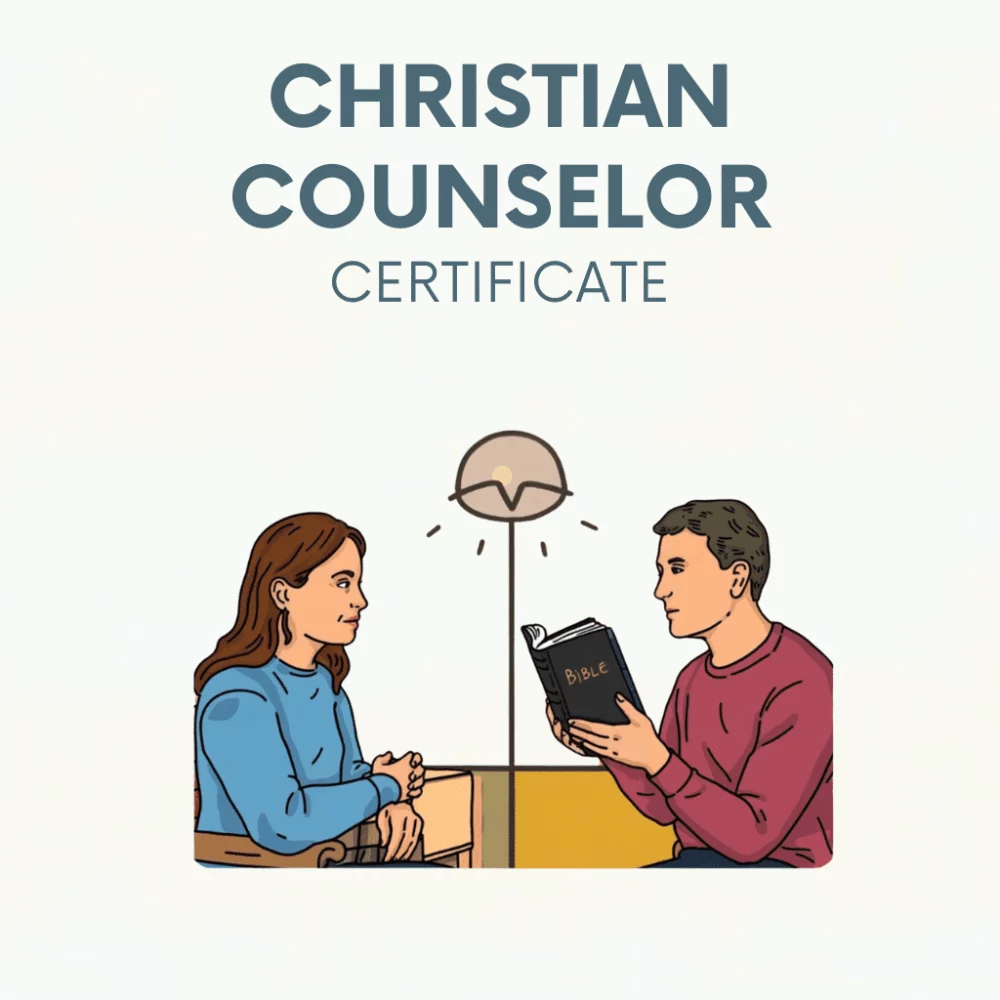
Recommended course
Answer the Call to Counsel Well
Now that you know what a Christian counselor is, see how the Christian Counselor course prepares you to listen, pray and apply Scripture with care.
- 40 hours, self-paced
- PDF and audio lessons
- Printable certificate
Regular price:
$395
Current price:
$77
15-day money-back guarantee